By Caroline Nassuuna
Officer Communications & Brand Management
The Prime Minister of Uganda, Rt. Hon Robinah Nabbanja has challenged accountants to rethink their role in advancing Uganda’s economic transformation.
Speaking as the Chief Guest at the 4th Public Finance Management (PFM) conference, Nabbanja underscored the urgent need for audit and finance functions to evolve beyond traditional compliance roles into strategic drivers of value.
“In an increasingly complex and resource-constrained environment, public finance practitioners must embrace innovation, anticipate emerging risks, and ensure that every public resource delivers measurable impact,” noted Nabbanja.
She further stressed the need to align public finance management with Uganda’s long-term development ambitions, particularly the transition from the third National Development Plan (NDP III) to NDP IV. This transition, she noted, is geared towards expanding the size of the economy by 2040, a goal that can only be realised through prudent and efficient utilisation of resources.
The Prime Minister highlighted that the national budget, currently estimated at UGX 83.4 trillion, is significantly financed through domestic resources, placing greater responsibility on government institutions and professionals to manage these funds effectively.
“Government must do more with less. Therefore, there is a need for improved efficiency, reduced wastage, and enhanced accountability across all sectors,” explained Nabbanja.
A key pillar of Uganda’s development strategy, the Parish Development Model (PDM), was cited as a flagship programme designed to stimulate production, create jobs, and transition more Ugandans into the money economy. However, its success, she cautioned, depends heavily on robust financial management systems and the integrity of those entrusted with public resources.
The Prime Minister also outlined critical priorities for strengthening public finance systems, including expanding domestic revenue mobilisation, promoting equitable and sustainable taxation, and ensuring value for money in all public expenditures.
She called for reforms such as the rationalisation of tax policies, including a review of certain levies like excise duty, to support economic growth while maintaining fairness.
Addressing accounting officers and finance professionals directly, she reminded them of their statutory mandate and their central role in safeguarding public trust. She urged them to uphold the highest standards of integrity, transparency, and efficiency, noting that the credibility of government institutions rests largely on their shoulders.
Furthermore, Nabbanja emphasised the growing importance of the accounting profession in national development.
“Strengthening compliance in financial reporting by certified professionals will not only enhance accountability but also improve decision-making and debt management across government,” said Nabbanja.
The Prime Minister further acknowledged the conference as a valuable platform for dialogue and partnership, commending stakeholders for their continued support of government efforts. She encouraged participants to use the forum to generate practical, actionable solutions that will strengthen public finance management systems and contribute to inclusive and sustainable national development.
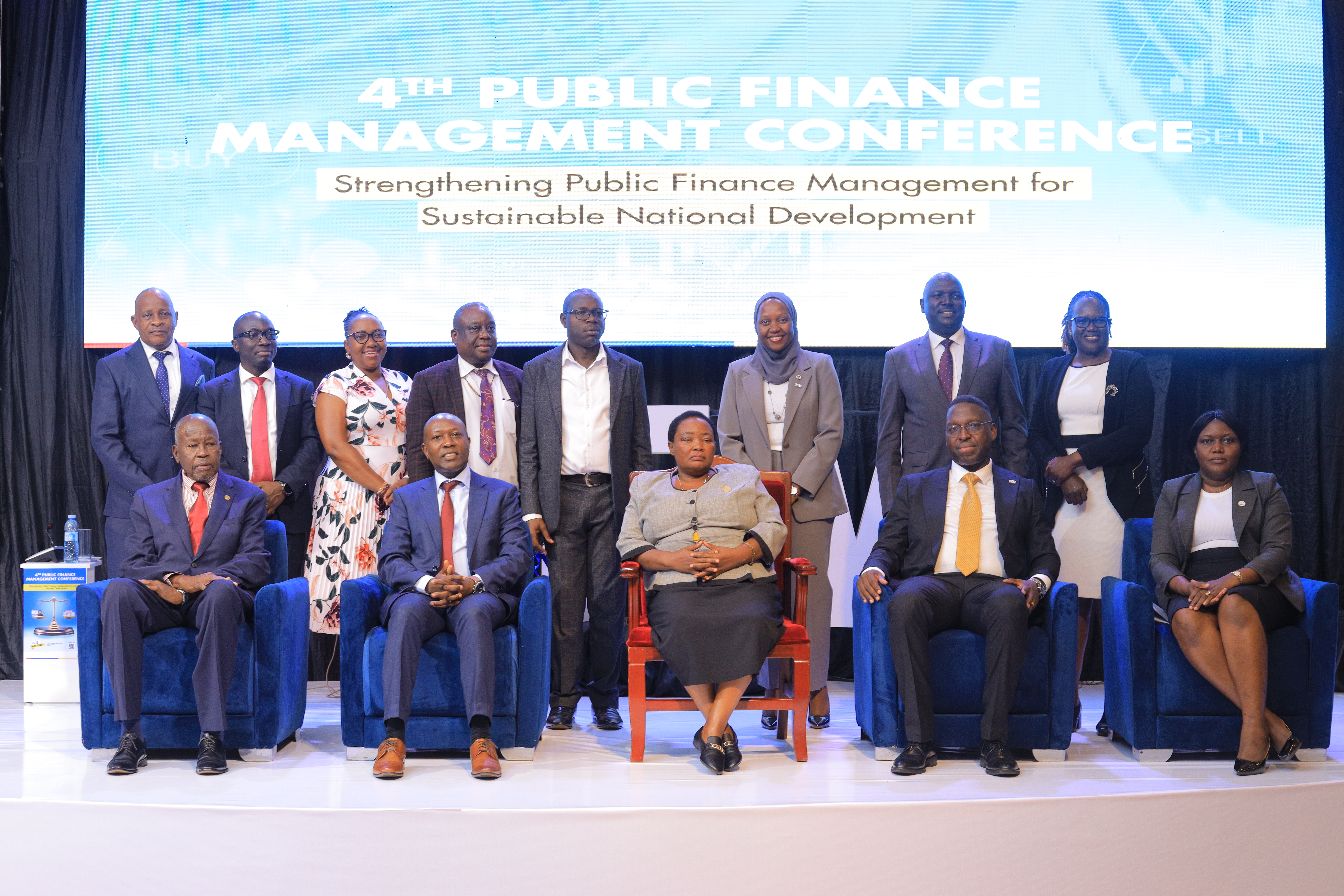
The PFM Conference runs from 6 – 8 May 2026, under the theme Strengthening Public Finance Management for Sustainable National Development.
The conference is organised by the Institute of Certified Public Accountants of Uganda (ICPAU) in partnership with Bank of Uganda, NSSF, NIRA, Pearl Bank and Uganda Baati.