By Jackline Nabirye
Officer Communications & Brand Management, ICPAU
External auditors have been urged to embrace technology, strengthen digital competencies, and reposition themselves as strategic advisors in an increasingly complex and fast-changing economic environment.
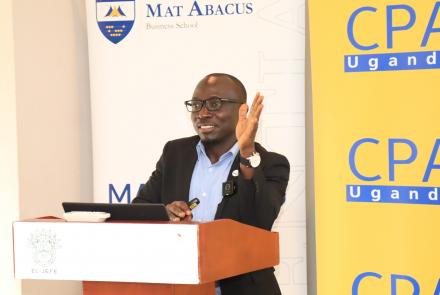
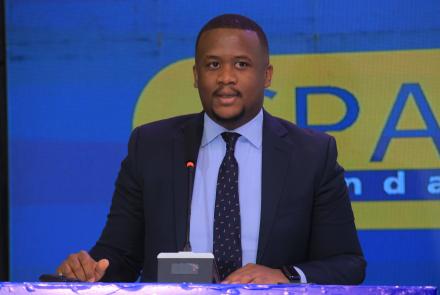
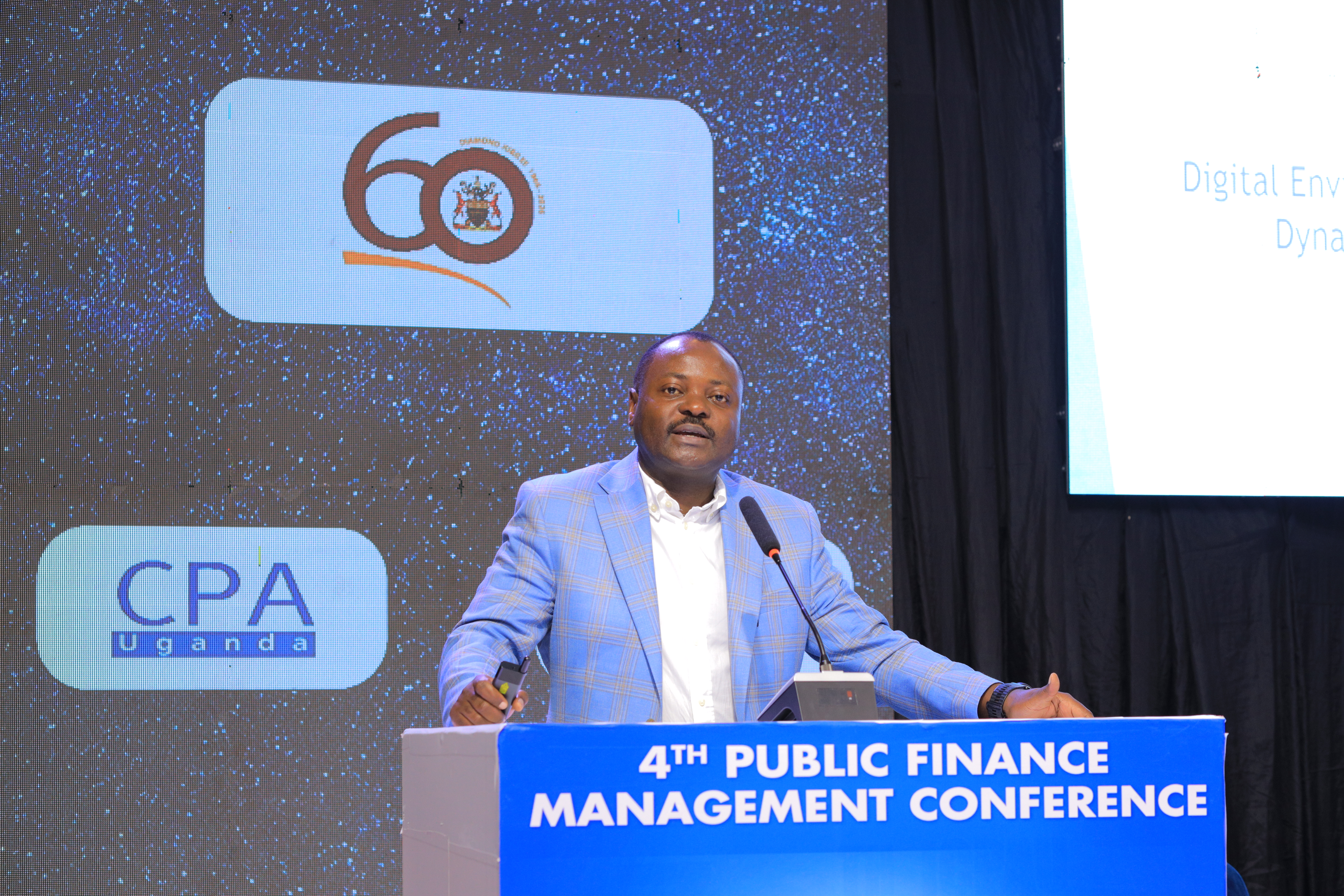
This call emerged strongly during the Public Finance Management (PFM) Conference where CPA Dr Andrew Timothy Nsamba of the Office of the Auditor General and CPA Asad Lukwago, Partner at KPMG Uganda, presented on “The Changing Role of External Audit in a Digital Environment and Dynamic Economy.”
The presenters highlighted that the traditional role of external auditors, which largely focused on compliance, historical reporting, and fault-finding, is rapidly evolving due to digital transformation, economic volatility, and rising stakeholder expectations.
Modern auditing is shifting toward performance auditing, value-for-money assessments, and systems assurance, requiring auditors to provide forward-looking insights and strategic assurance rather than merely verifying historical financial information.
Nsamba explained that traditional audit approaches have long been constrained by retrospective reviews, limited sampling, time lags, and weak fraud detection mechanisms. However, the rise of technologies such as artificial intelligence (AI), big data analytics, blockchain, automation, and cloud computing is fundamentally changing how audits are conducted.
“External audit is evolving from a historical compliance officer to a forward-looking provider of trust and strategic assurance,” he noted.
He pointed out that today’s digital economy presents new and sophisticated risks, including cyber fraud, insider threats, deepfakes, and data breaches, all of which require auditors to adopt more advanced tools and approaches.
Instead of relying on sample testing, auditors are increasingly moving toward continuous auditing and full-population data analysis that can identify anomalies, patterns, and predictive risks in real time.
CPA Asad Lukwago demonstrated how technology and AI are already transforming audit processes within global firms such as KPMG. He highlighted the growing use of AI-powered transaction scoring, automated document reviews, fraud detection algorithms, and real-time audit analytics to improve audit quality, transparency, and efficiency.
He noted that the future of audit will be deeply integrated with clients’ digital systems and enterprise resource planning platforms, enabling auditors to provide more timely and data-driven assurance services.
The presenters also underscored the growing importance of IT audits and cybersecurity reviews, stressing that digital assurance is no longer optional in today’s environment.
As organisations continue to digitise operations and financial systems, auditors are expected to evaluate not only financial records but also the integrity, resilience, and security of the systems generating those records.
The discussions further highlighted a major shift in stakeholder expectations. Governments, investors, development partners, and citizens increasingly expect auditors to provide insights beyond financial statements, including assessments related to governance, risk management, sustainability, and operational efficiency.
This expanding scope, delegates heard, requires a new generation of auditors equipped with skills in data analytics, cybersecurity, critical thinking, and emerging technologies.
Lukwago emphasised, however, that despite advances in automation and AI, human judgment remains central to the audit process.
“The human auditor remains in the loop,” he noted, explaining that technology should enhance and not replace professional skepticism, ethical judgment, and audit conclusions.
The presenters also called on regulators and professional bodies to strengthen audit standards, increase oversight, and develop digital audit frameworks capable of keeping pace with technological disruption.
For accountants and public finance practitioners, the session delivered a strong call to action, “adapt or risk becoming irrelevant in a rapidly changing environment,” he noted.
Auditors were urged to invest in continuous learning, embrace innovation, and reposition themselves as trusted advisors capable of navigating complex digital and economic realities.
As Uganda accelerates digital transformation across both the public and private sectors, discussions underscored that the future of external audit will be defined not only by compliance but by the ability to deliver trust, transparency, and strategic value in real time.
The PFM conference is a convention of public sector actors for discourse on public financial management policy and systems for effective service delivery. The goal of the PFM conference is to influence national economic policy.
Resolutions are submitted to the Ministry of Finance, Planning and Economic Development. The 4th PFM conference is organised by the Institute of Certified Public Accountants of Uganda (ICPAU) in partnership with National Social Security Fund (NSSF), Bank of Uganda, National Identification and Registration Authority (NIRA), Uganda Baati and Pearl Bank.
END