By Caroline Nassuuna
ICPAU
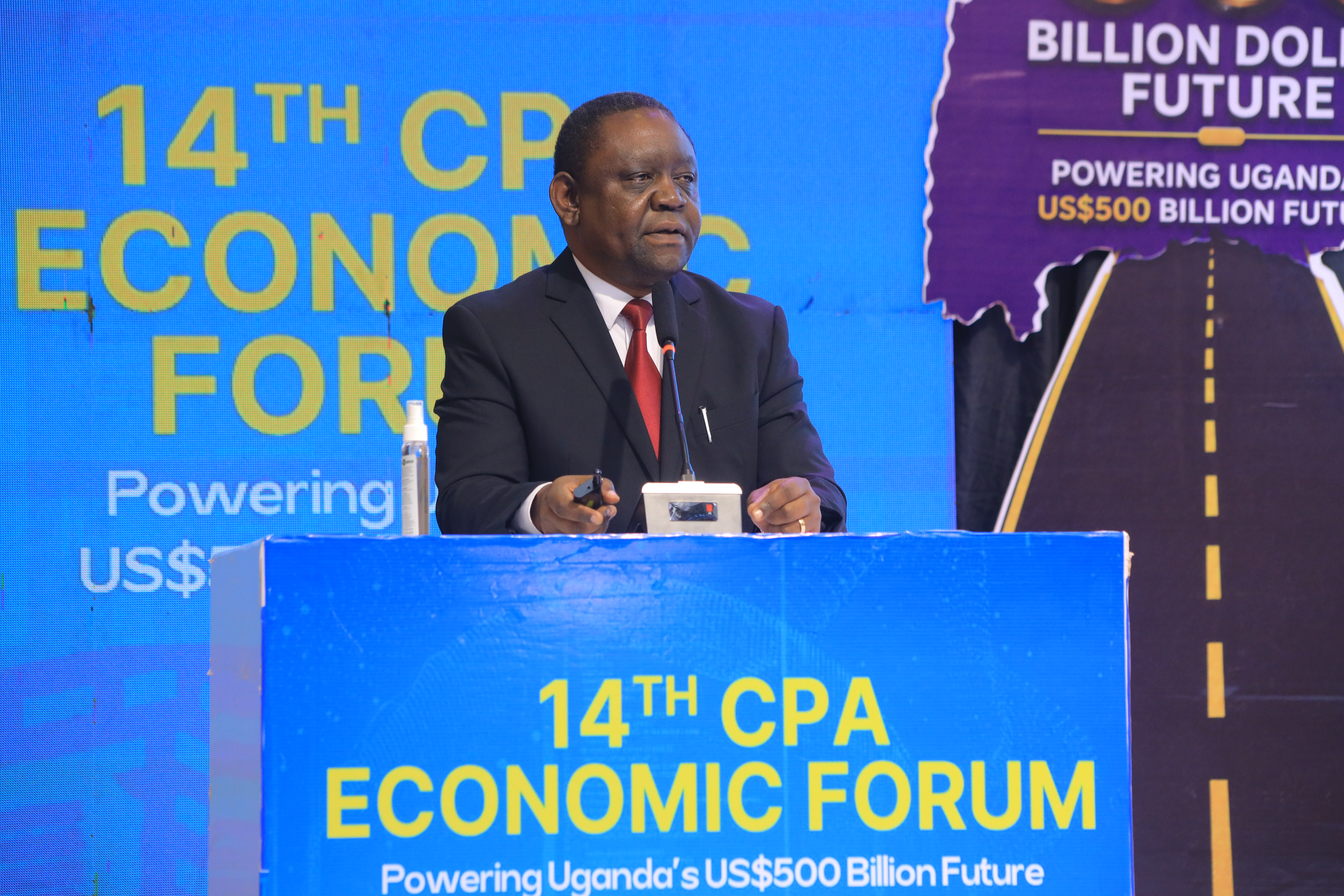
Economists have agreed that Uganda's ambition to grow its economy from US$50 billion to US$500 billion is not simply an economic target but a human story. This discussion was held at the 14th CPA Economic Forum at Imperial Resort Beach Hotel, Entebbe.
During a discussion on one of the topics, Building Skilled and Adaptive Human Capital for Economic Development, participants were challenged to look beyond infrastructure and financial investment and focus on the country's greatest resource, its people.
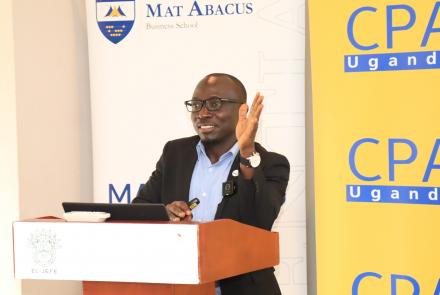
CPA Moses Kasakya – Executive Director, Technical & Vocational Education and Training (TVET) Council reminded participants that Uganda has one of the youngest populations in the world. Nearly half of the country's population is under 18, while over 21 million Ugandans are of working age.
Yet this demographic advantage remains largely untapped, with more than five million young people aged 18 to 30 currently not in employment, education or training. These statistics paint two contrasting pictures: a significant challenge, but also an extraordinary opportunity. Uganda's population can either become a burden or the engine that powers economic transformation.
“Having a youthful population alone is not enough. Human capital only contributes to economic growth when it is skilled, productive and adaptable. Skilled labour is more than academic qualifications; it is the ability to solve problems, apply knowledge, embrace technology and continuously learn. In an economy where technologies evolve rapidly and industries constantly change; adaptability has become just as valuable as technical competence. Lifelong learning, reskilling, digital literacy and recognition of prior learning are essential ingredients for national competitiveness,” noted CPA Kasakya.
Additionally, Patrick Maxey Apita – Lecturer/ Trainer in Charge of Training, Research, Innovations and Academic Affairs, Lugogo Vocational Training Institute brought this reality into sharp focus through the lens of TVET.
He argued that Uganda's economic aspirations will only be realised if vocational education moves from the margins to the mainstream. TVET is not simply about teaching trades; it is about producing innovators, entrepreneurs and problem-solvers who can drive industrialisation.
As manufacturing expands, infrastructure grows, oil and gas production accelerates, and digital technologies reshape industries, Uganda will require technicians, engineers, artisans and digitally competent workers whose skills are directly aligned with industry needs.
The discussion further highlighted reforms already underway, such as competency-based training, stronger industry partnerships and apprenticeship programmes, which are bridging the gap between classrooms and workplaces.
Similarly, George Wafula – Assistant Commissioner, Human Resource Planning & Development, Ministry of Public Service noted that the Ministry’s reform agenda largely focuses on the same understanding. Human resource planning, professionalisation, continuous learning, digital transformation, knowledge management, pay reform, performance management and strategic partnerships with universities, all designed to create a public service that is adaptive, accountable and future-ready.
“These reforms recognise that investments in human capital should not be viewed as recurrent expenditure but as strategic investments that yield long-term economic returns through higher productivity, better governance, improved investor confidence and stronger public service delivery,” said Wafula.
Accountants were reminded that Uganda's human capital journey is not without its own internal challenges. Skills shortages, digital capability gaps, leadership succession concerns, an ageing workforce in key sectors and difficulties attracting and retaining specialised talent all threaten the country's development ambitions.
Addressing these issues will require deliberate investment in continuous learning, leadership development and workforce planning if Uganda is to build institutions capable of sustaining economic transformation over the coming decades.
Uganda has the demographic potential, policy direction and institutional reforms necessary to achieve its ambitious economic vision. What remains is the collective commitment to invest in people with the same urgency that the country invests in roads, factories and technology.
The 14th CPA Economic Forum is organised by the Institute of Certified Public Accountants of Uganda (ICPAU) and is being held from 15 to 17 July 2026 under the theme Powering Uganda’s US$ 500 Billion Future.
Partnering organisations are National Identification and Registration Authority (NIRA), Uganda National Oil Company (UNOC), The Electoral Commission, The Micro Finance Support Centre, PKF Uganda, Ernst & Young, National Water & Sewerage Corporation (NWSC), Electricity Regulatory Authority (ERA), Centenary Bank, Insurance Regulatory Authority (IRA), Uganda Retirement Benefits Regulatory Authority (URBRA) and Roofings.
END