By Joan Abaasa
Communications Officer, ICPAU
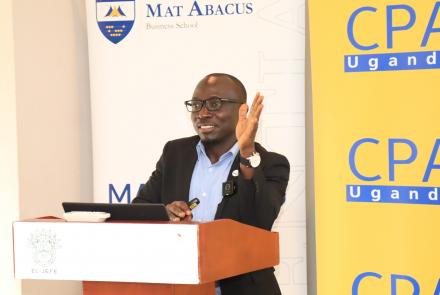
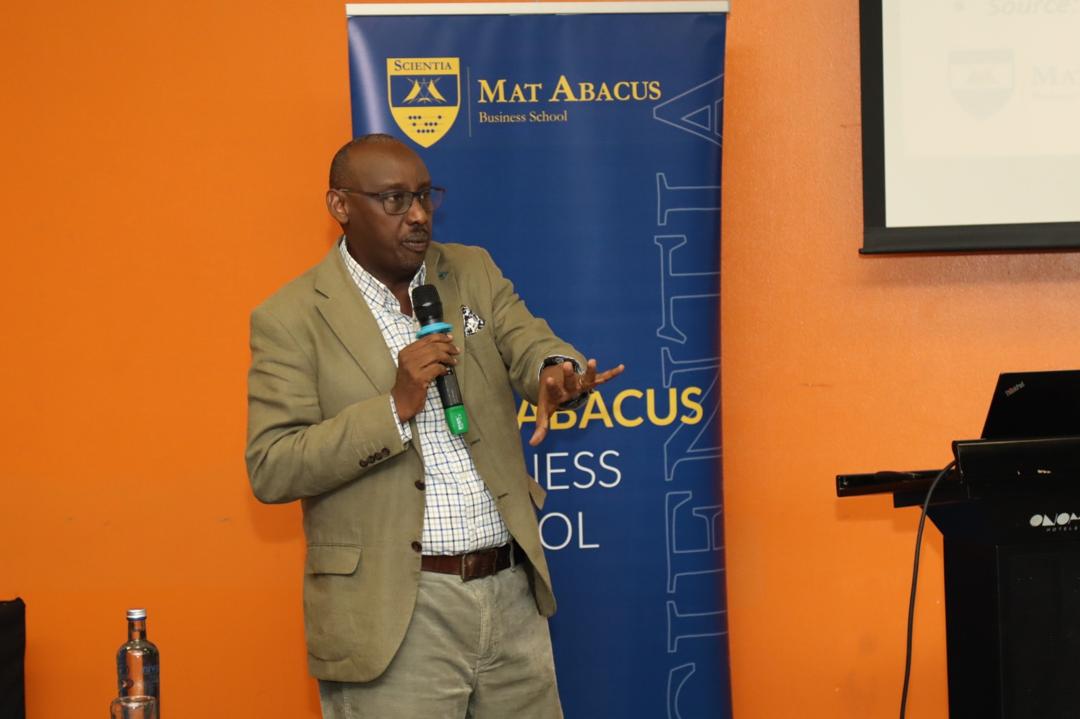
CFOs in finance and business have been urged to proactively embrace digital disruption and manage organisational change with resilience, agility, and purpose to remain relevant in an increasingly dynamic global economy. This call was made during the CFO Leadership Academy ― second session in the third quarter, where Stephen Asiimwe, Executive Director of the Private Sector Foundation Uganda (PSFU), and Badru Ntege, Director of NFT Consult Ltd, delivered presentations on leadership, change management, and digital transformation held on 18 December 2025 at Onomo Hotel Kampala.
Speaking on Leading Change and Managing Transitions, Asiimwe emphasised that change is inevitable and constant, driven largely by technology, global competition, and shifting consumer behaviour. Drawing lessons from history, he highlighted how dominant technologies have evolved over time, from German and Japanese manufacturing to Korean electronics and now Chinese technological leadership, warning that organisations that fail to adapt risk obsolescence, as illustrated by the collapse of firms such as Kodak.
Asiimwe distinguished between change, which often occurs rapidly, and transition, the emotional and psychological process individuals experience as they adapt. He noted that poorly managed transitions can lead to resistance, anxiety, confusion, and declining performance.
He said, “Leaders must therefore manage both systems and people through clear communication, empathy, and strategic planning.”
He further outlined different types of organisational change, including incremental improvements, structural shifts, and sudden transformational changes such as those triggered by COVID-19. Regardless of the type, he stressed that leadership must provide clarity, manage risks, realign roles, and communicate consistently to sustain morale and productivity.
Complementing this perspective, Badru Ntege delivered a presentation on Digital Disruption and Its Impact on Leadership, focusing on how technology is redefining business models, decision-making, and value creation. He noted that digital disruption is not just about adopting new tools, but about understanding the principles behind technology and using them to solve real business problems.
Using practical examples, Ntege illustrated how innovations such as smartphones displaced traditional internet service models and how streaming platforms disrupted satellite television. He emphasised that leaders must question existing assumptions, challenge the status quo, and rethink how value is delivered to customers.
Ntege also highlighted how digital transformation affects finance, operations, and risk management. From last-mile distribution to health technology solutions, he demonstrated how data, cloud computing, and platform-based models can significantly reduce costs, improve efficiency, and enhance transparency. He cited global examples such as Siemens, which achieved reduced production time and manufacturing errors through a comprehensive digital transformation strategy.
A key message from his presentation was the growing importance of technology literacy among senior leaders, particularly CEOs and CFOs. He noted that data has become a critical organisational asset and that leaders must understand how to leverage digital platforms, analytics, and artificial intelligence to drive strategy and competitiveness.
Both speakers highlighted the importance of innovation as a survival strategy. Asiimwe quoted Bill Gates, noting that innovation is the most powerful force for change, while Ntege demonstrated how emerging technologies such as Artificial Intelligence can accelerate problem-solving, improve productivity, and unlock new financing and business opportunities.
During his closing remarks, Ntege urged leaders to move beyond fear of disruption and instead see change as an opportunity for growth. By embracing innovation, managing transitions effectively, and aligning technology with purpose and strategy, organisations can survive disruption and thrive in an increasingly complex and competitive environment.
The CFO Leadership Academy is a programme organised by MAT ABACUS Business School in partnership with the Institute of Certified Public Accountants of Uganda (ICPAU). It was designed to equip CFOs with the requisite leadership skills to enable them adapt to strategic shifts in the environment.
It is a one-year programme, split into 4 quarters with 3 classes in each quarter. The 18 December class was the second session in the third quarter of the 2025/26 edition of the programme. The next CFO Leadership session is scheduled for 22 January 2026, under the theme “Productivity in the New Economy.”
-END-